About Us / History
A palace rich in history – passionately guided into the future.
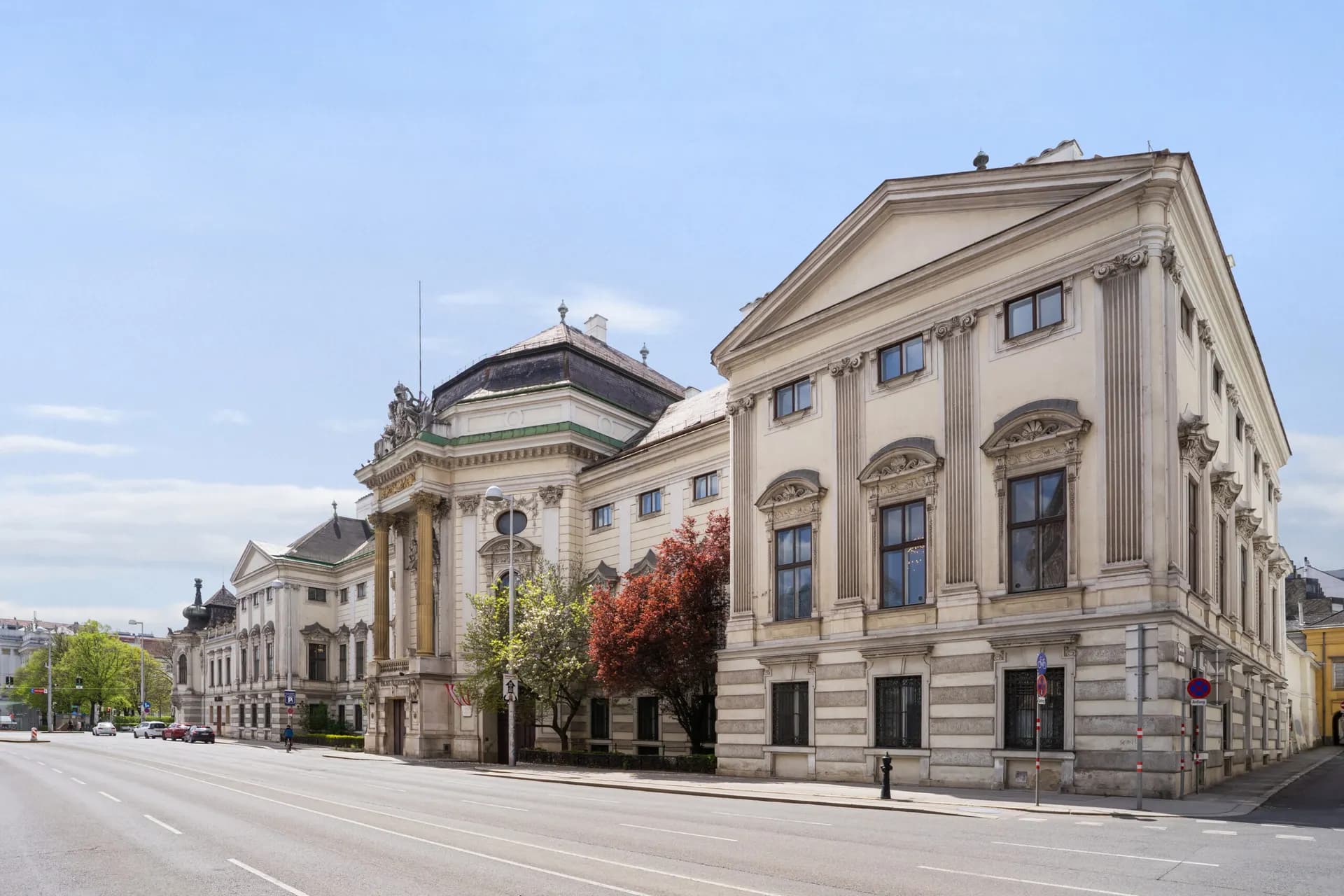
The Palais Auersperg is a Baroque jewel in the heart of Vienna. Built between 1706 and 1710 by Fischer von Erlach and Hildebrandt, it was the scene of aristocratic culture, lavish celebrations and political encounters for centuries. Personalities such as Christoph Willibald Gluck, Empress Elisabeth and Emperor Franz Joseph gave the house its splendour. It also made history as a film set – for example in the classic film The Third Man.
A passion for events with history
Today, we continue this legacy with an event team driven by a passion for extraordinary experiences, transforming every occasion into something truly special. With sensitivity, professionalism and attention to detail, we combine imperial elegance with contemporary event culture.
Over 300 years of Palais Auersperg
From Baroque garden palace to Vienna’s grand ballroom – the key milestones.
- Construction begins
- 1706
- Years of history
- 300+
- Rooms & halls
- 17
- Guests possible
- 1,000
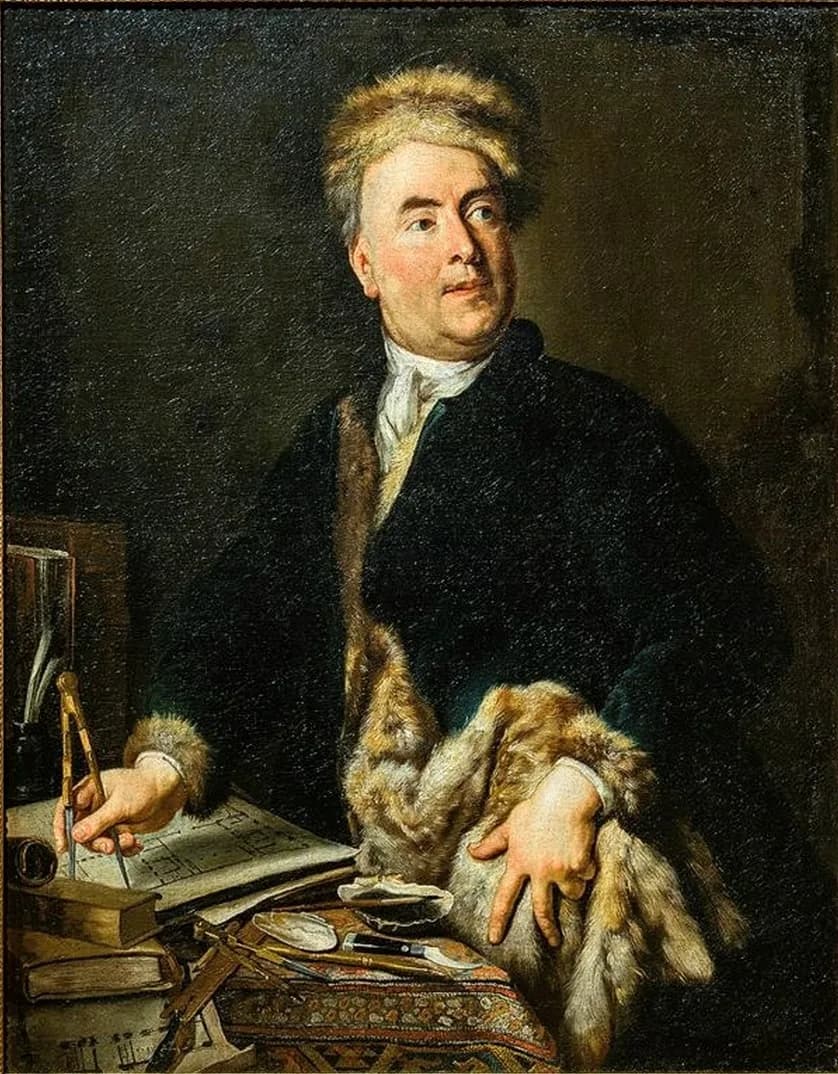 1706
A Baroque garden palace is born
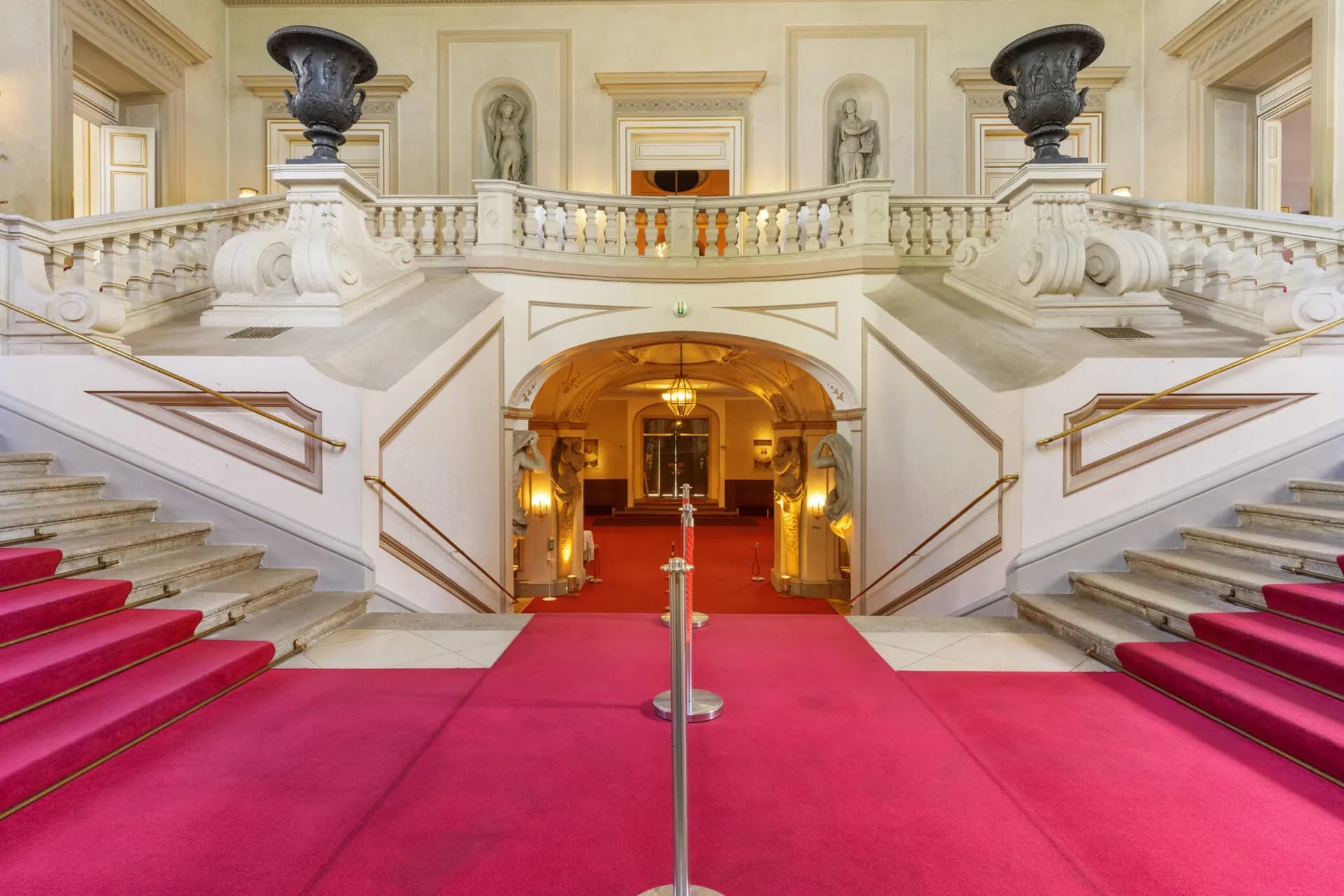
Outside the city gates, on the grounds of the old Rottenhof, a garden palace is built between 1706 and 1710 to designs by Johann Lucas von Hildebrandt and Johann Bernhard Fischer von Erlach – the two great architects of Viennese Baroque.
Image: Jacob van Schuppen, Public domain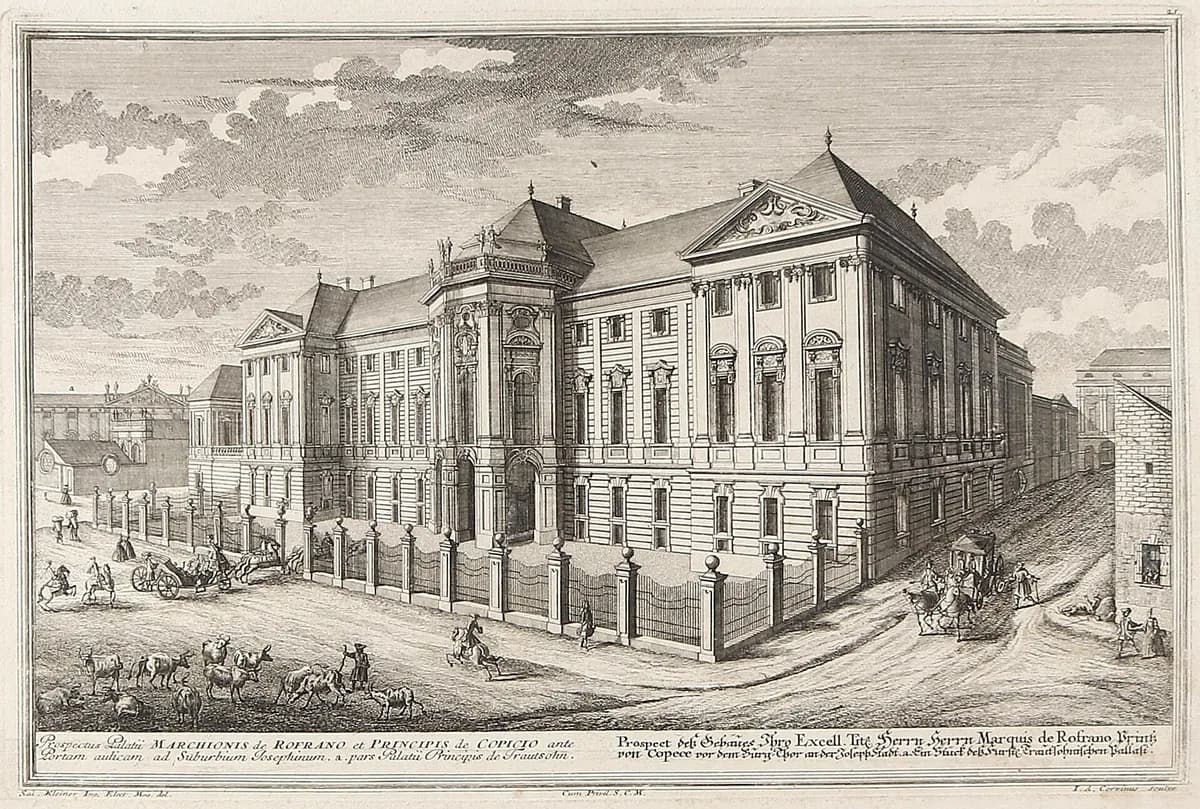 1721
Palais Rofrano
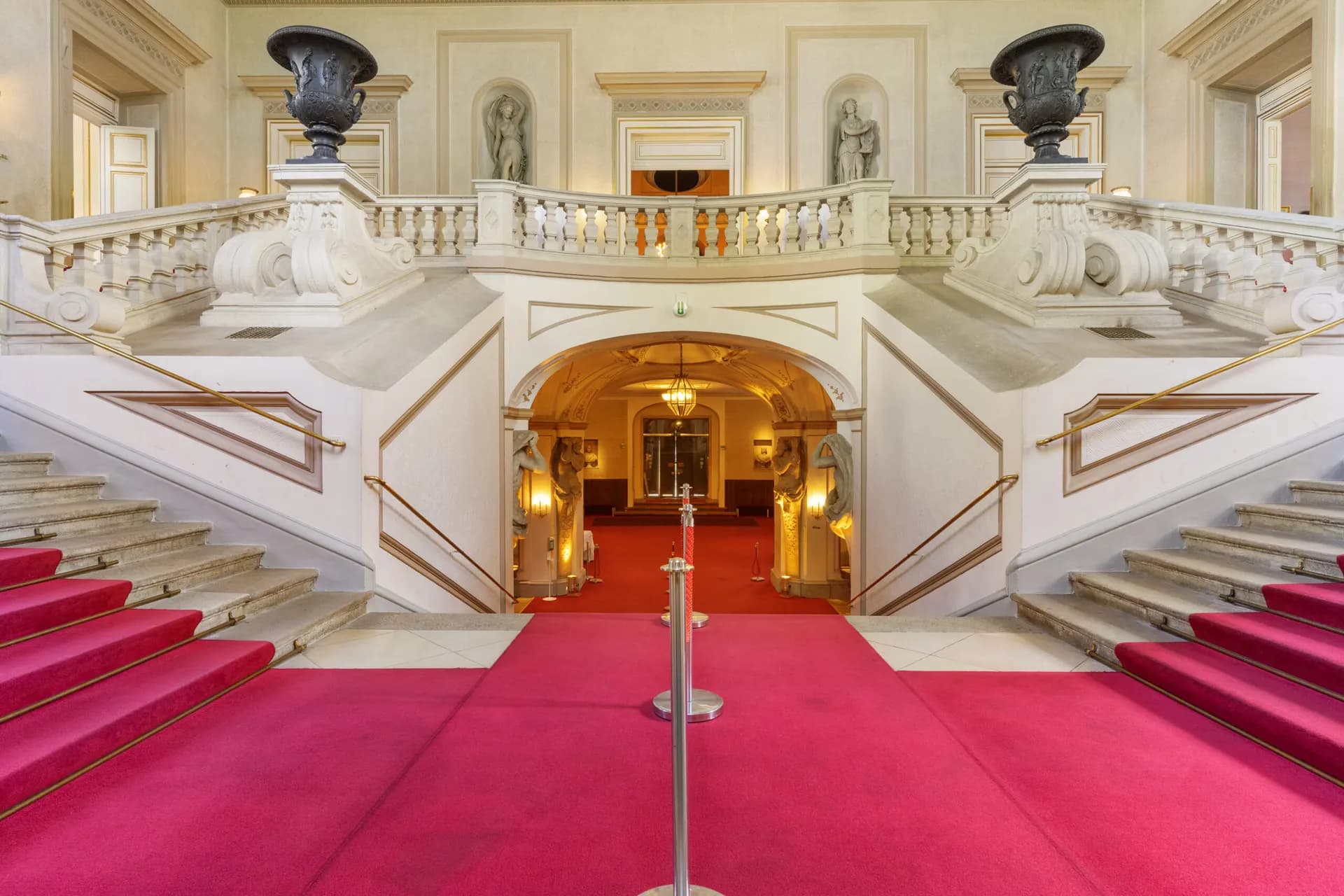
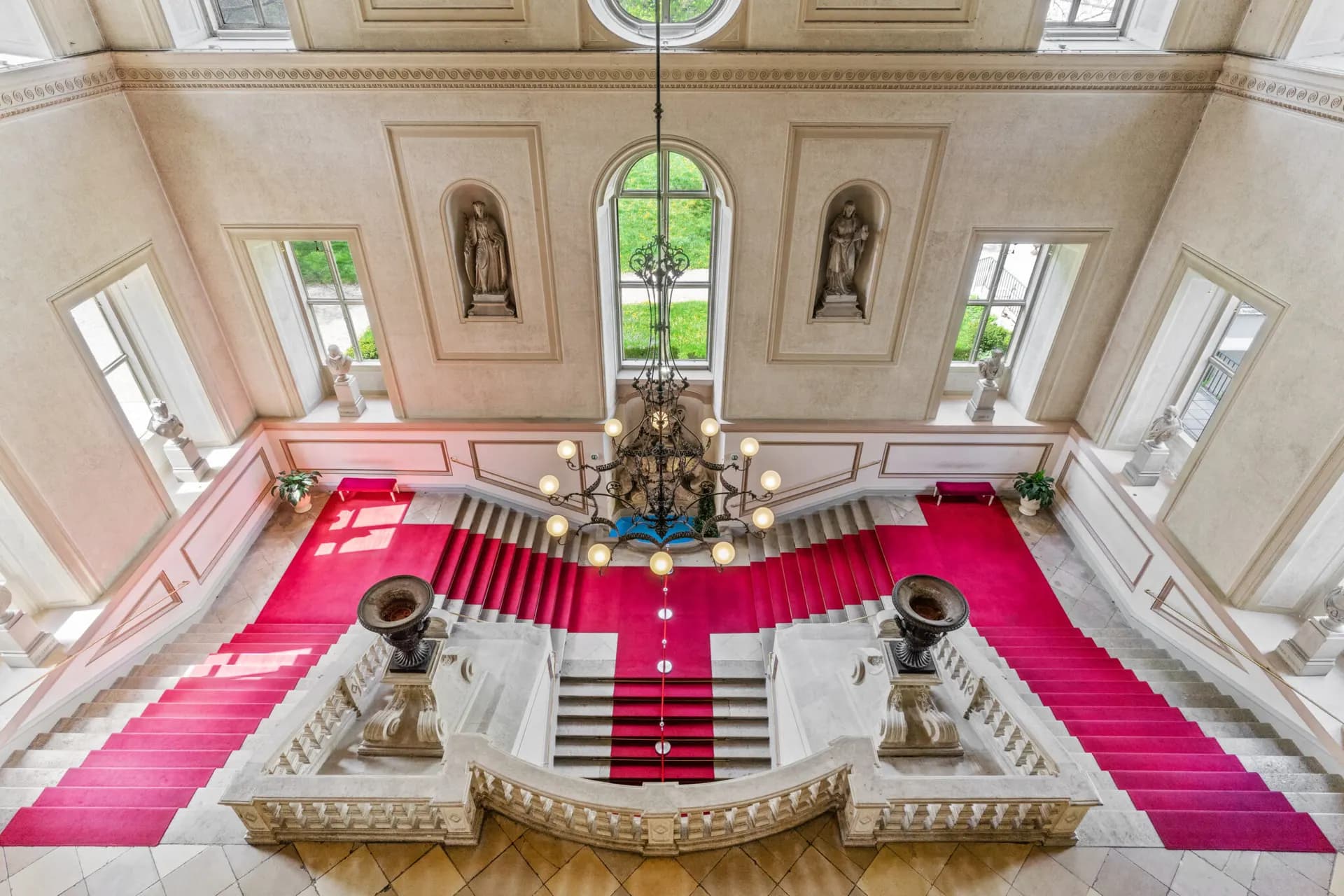
Marchese Hieronymus Capece di Rofrano acquires the house, which now bears his name. Johann Christian Neupauer remodels the central wing; hard Kaiserstein from Kaisersteinbruch is used for the grand staircase and the columns.
Image: Salomon Kleiner, Public domain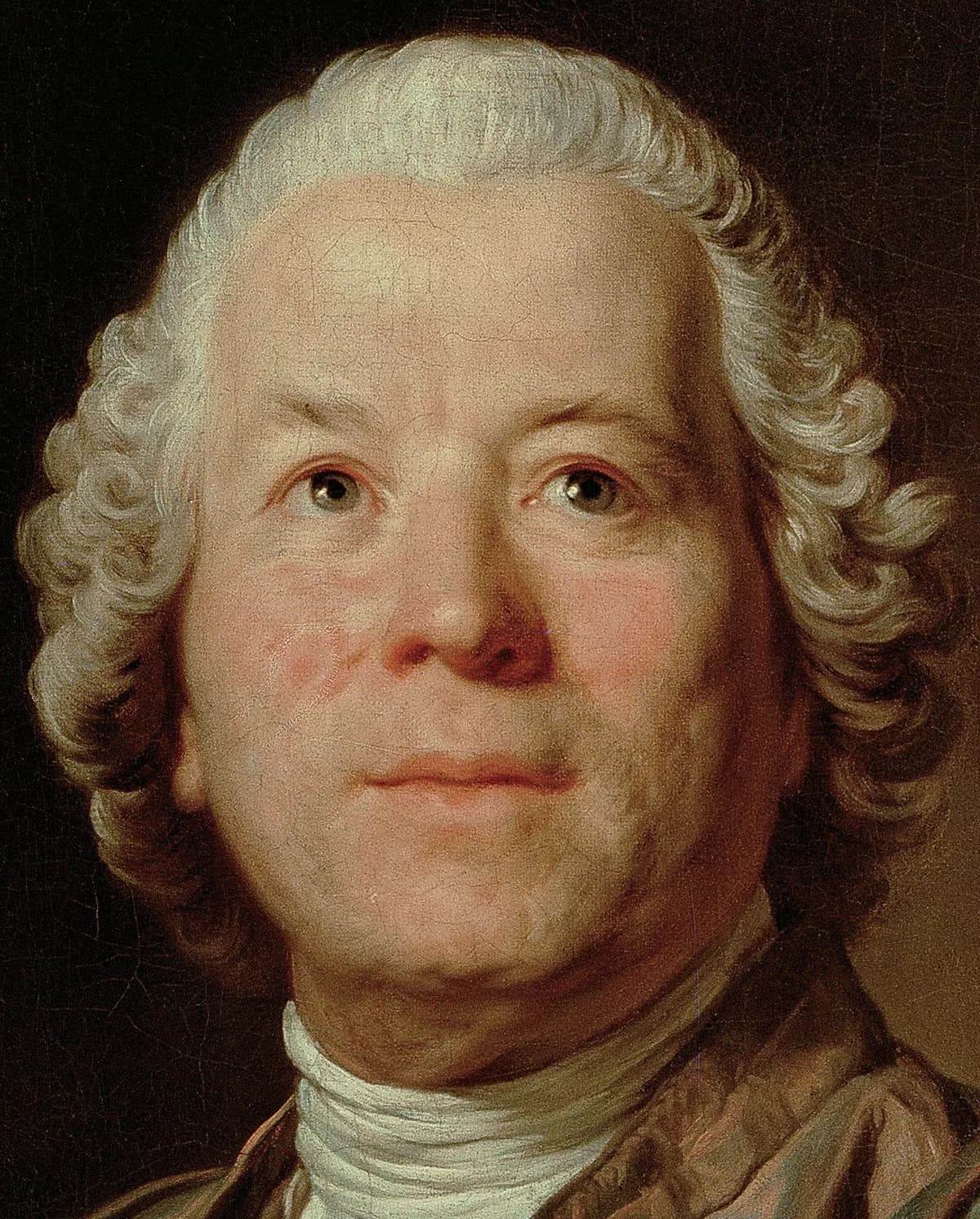 1760
Music under Christoph Willibald Gluck
Field Marshal Prince Joseph of Saxe-Hildburghausen makes the palace his winter residence and a centre of music: Christoph Willibald Gluck conducts his celebrated house concerts.
Image: Joseph-Siffred Duplessis, Public domain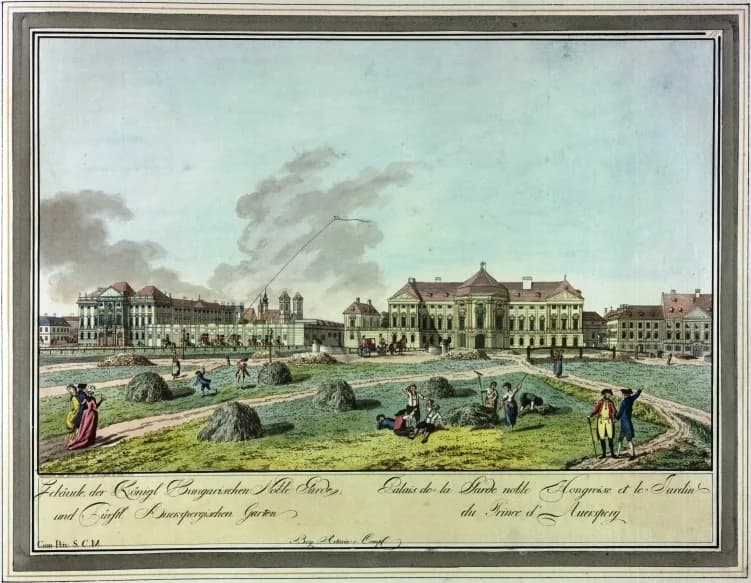 1781
The Princes of Auersperg
Prince Johann Adam Auersperg, a confidant of Maria Theresa and Francis Stephen, buys the palace and has it decorated by Italian artists. It remains in the family for more than 170 years – and still bears their name today.
Image: Johann Ziegler, Public domain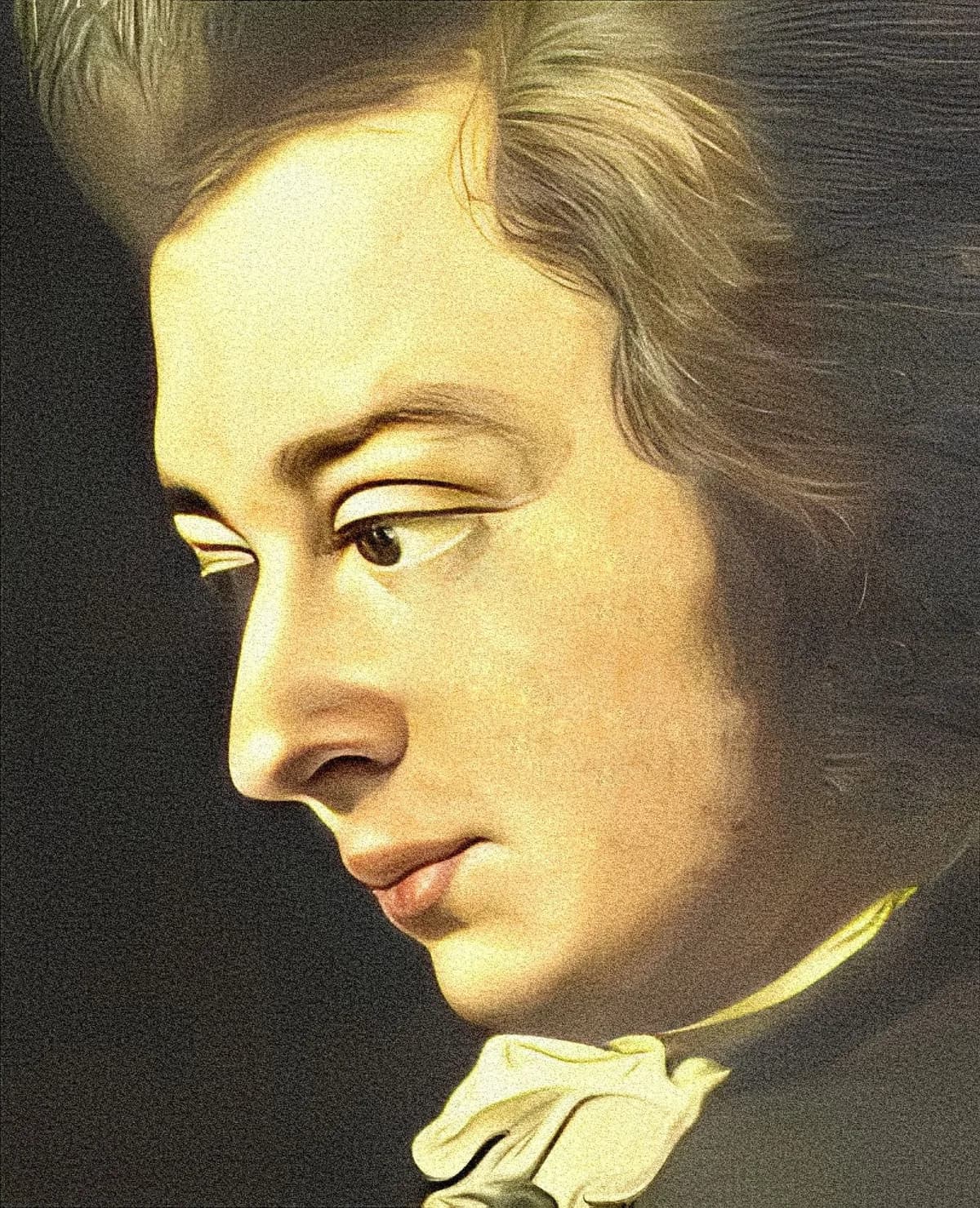 1786
Mozart conducts “Idomeneo”
In March 1786 the palace hosts a private performance of Mozart’s opera “Idomeneo”, sung by ladies and gentlemen of Viennese society – conducted by Mozart himself. Later, Haydn’s “The Seven Last Words of Our Saviour on the Cross” is also performed here.
Image: Joseph Lange, Public domain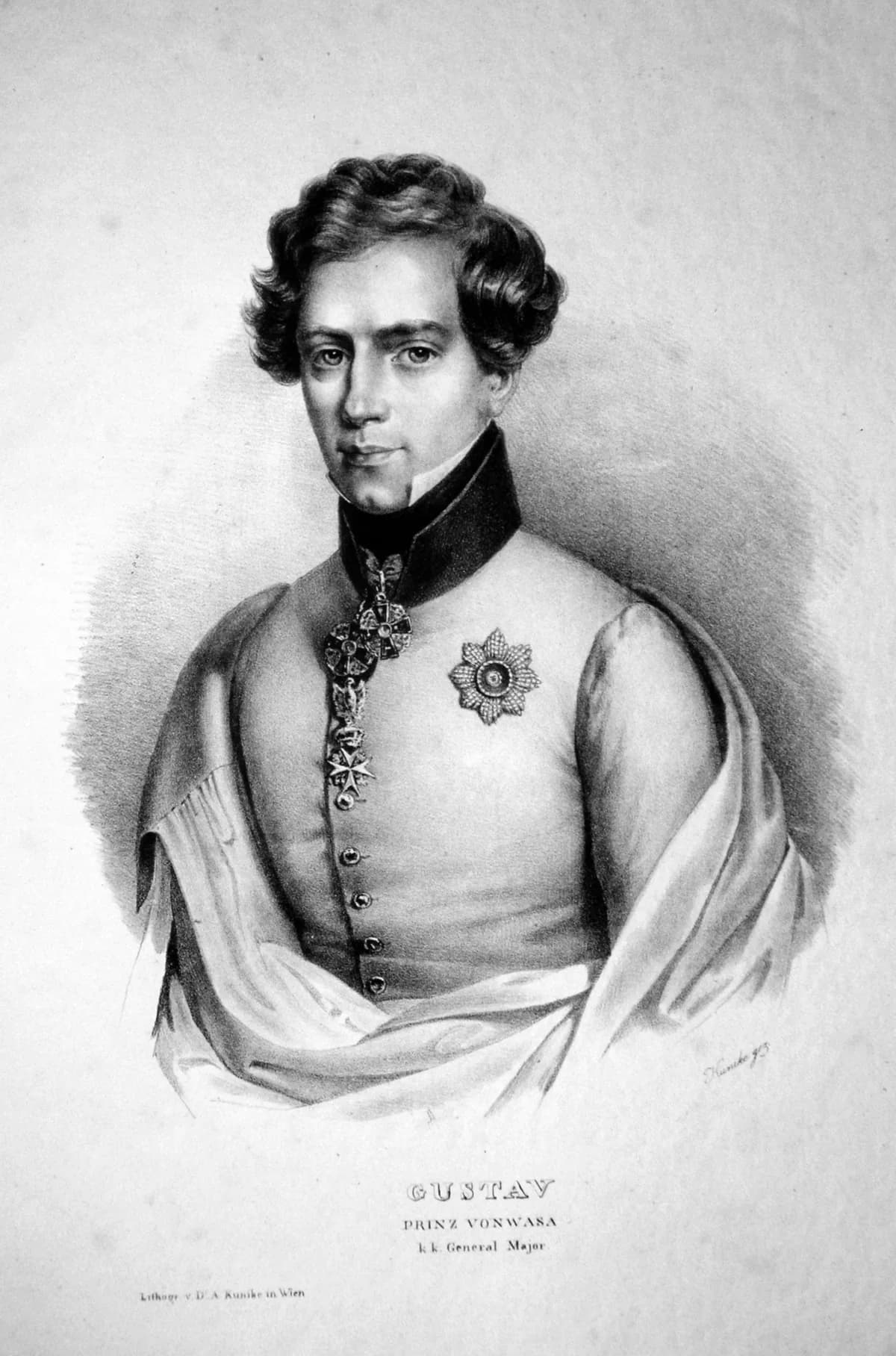 1827
A royal house in residence
Until 1837, Prince Gustav of Vasa lives in the palace with the Swedish court, after his inheritance in Sweden was contested.
Image: Adolph Kunike, Public domain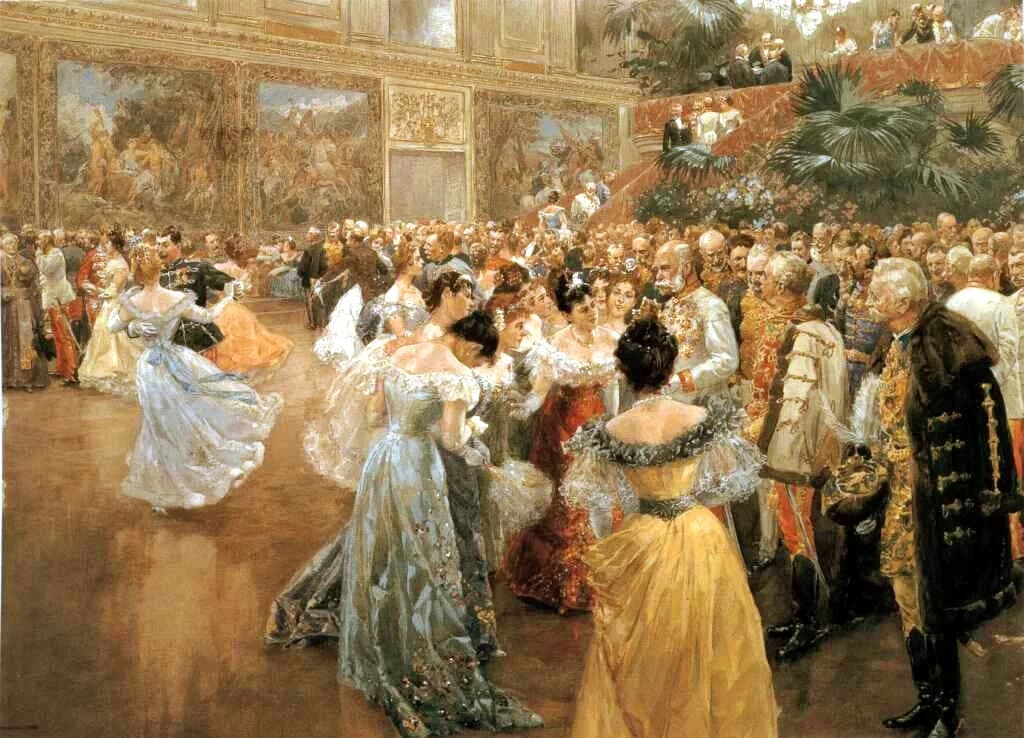 1856
A gala ball for the imperial court
From 1853, Prince Karl Auersperg has the palace lavishly restored. On 13 April 1856 its completion is celebrated with a gala dance – attended by the imperial court.
Image: Wilhelm Gause, Public domain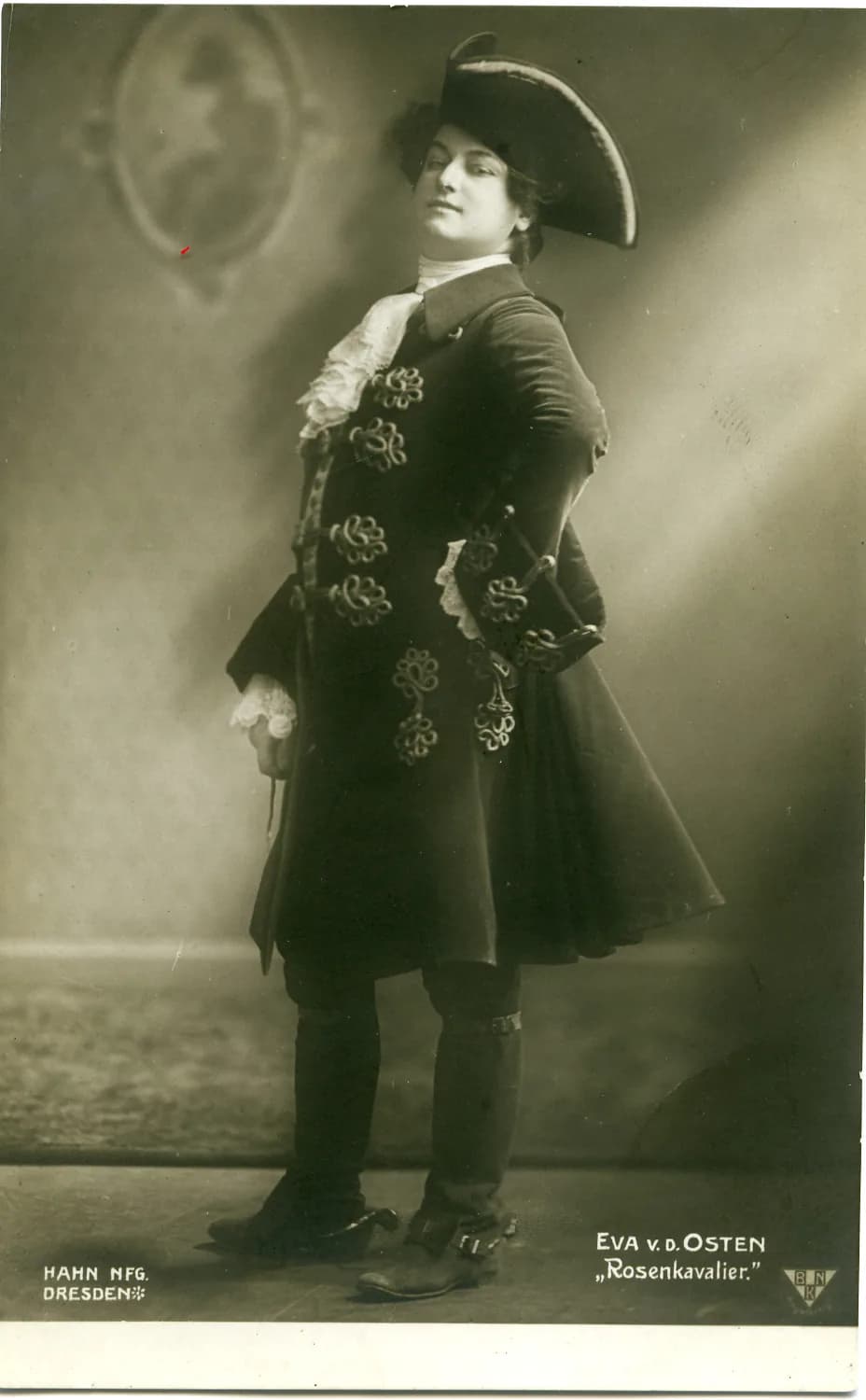 1911
The “Palais Rosenkavalier”
In the opera “Der Rosenkavalier” by Richard Strauss and Hugo von Hofmannsthal, the title character is Octavian Rofrano – named after the palace’s former owner. In the 20th century the palace is therefore also known as the “Palais Rosenkavalier”.
Image: Ernst Müller (Hofphotograph Dresden), Public domain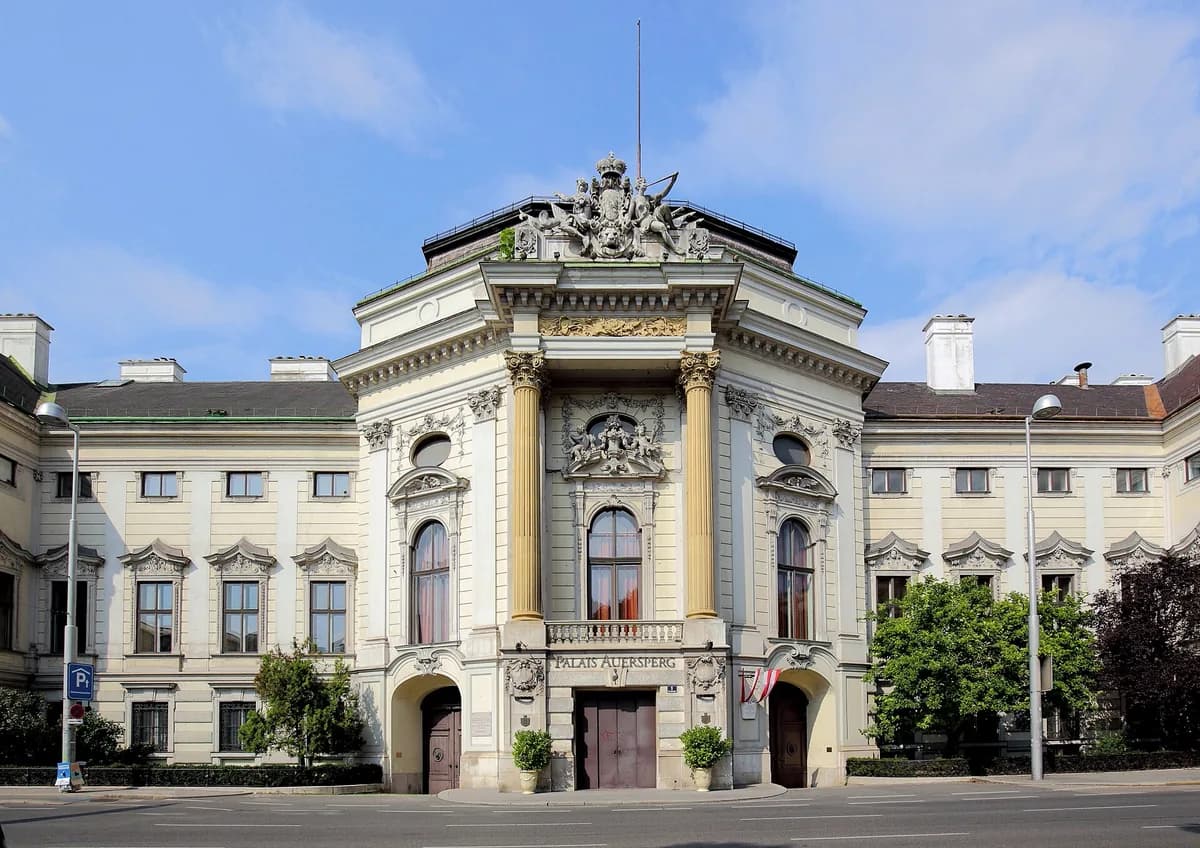 1923
Monuments office and film
Until 1935 the newly founded Federal Monuments Office has its seat in the palace; a film company uses other rooms.
Image: C.Stadler/Bwag, CC BY-SA 4.0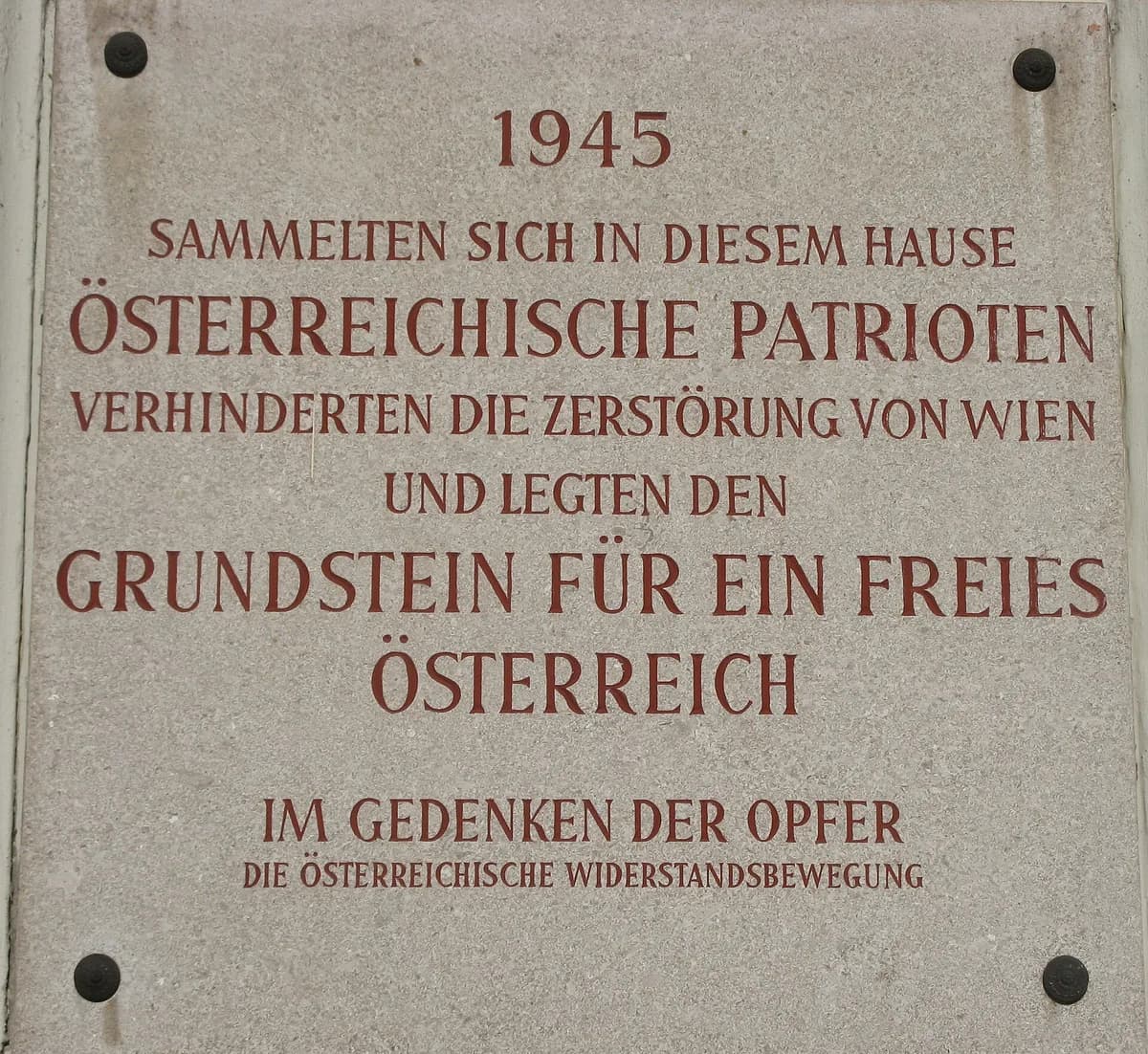 1942
A hiding place for the resistance
Christiane Croÿ, sister of the last prince, inherits the palace. Her family lives in the upper rooms and hides resistance fighters there. The Austrian resistance movement “O5” forms in the palace – a plaque at the entrance commemorates it.
Image: Buchhändler, CC BY-SA 3.0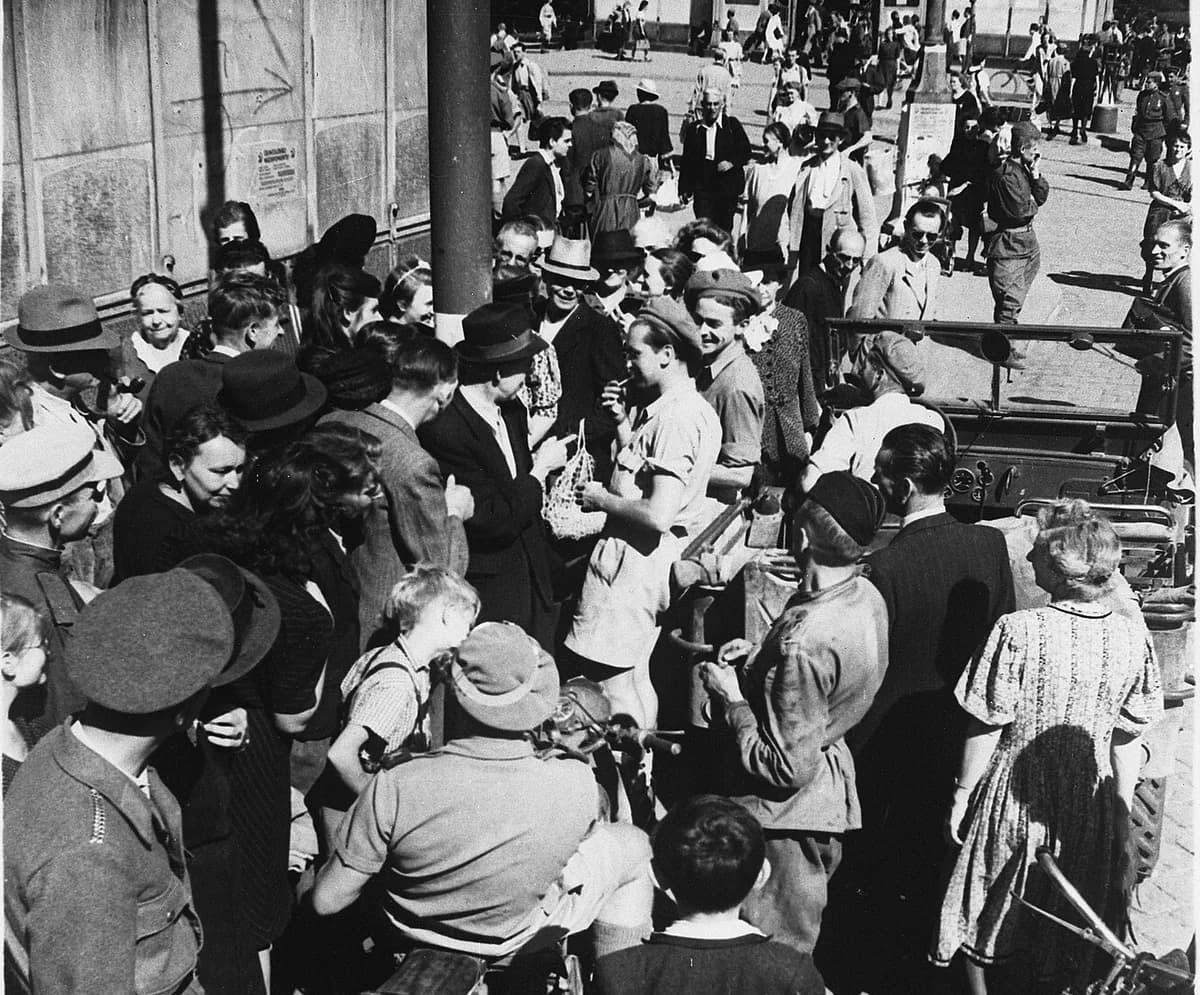 1945
Allied headquarters
During the occupation until 1955, the palace houses the Inter-Allied Military Police of the four occupying powers.
Image: Anefo / Nationaal Archief, CC0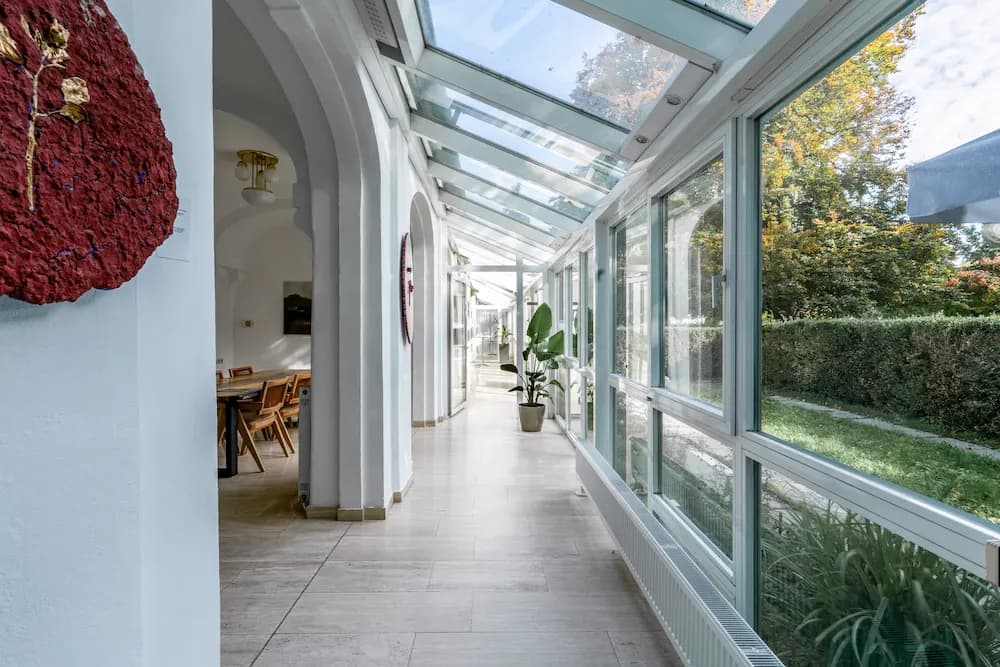 1954
A new beginning after the war
Consul Alfred Weiss, founder of Arabia Kaffee, buys the palace in 1953 and has the war damage repaired. The orangery and winter garden are added to designs by Oswald Haerdtl. On 5 February 1954 the palace reopens – with a coffee house for 600 guests.
 2010s
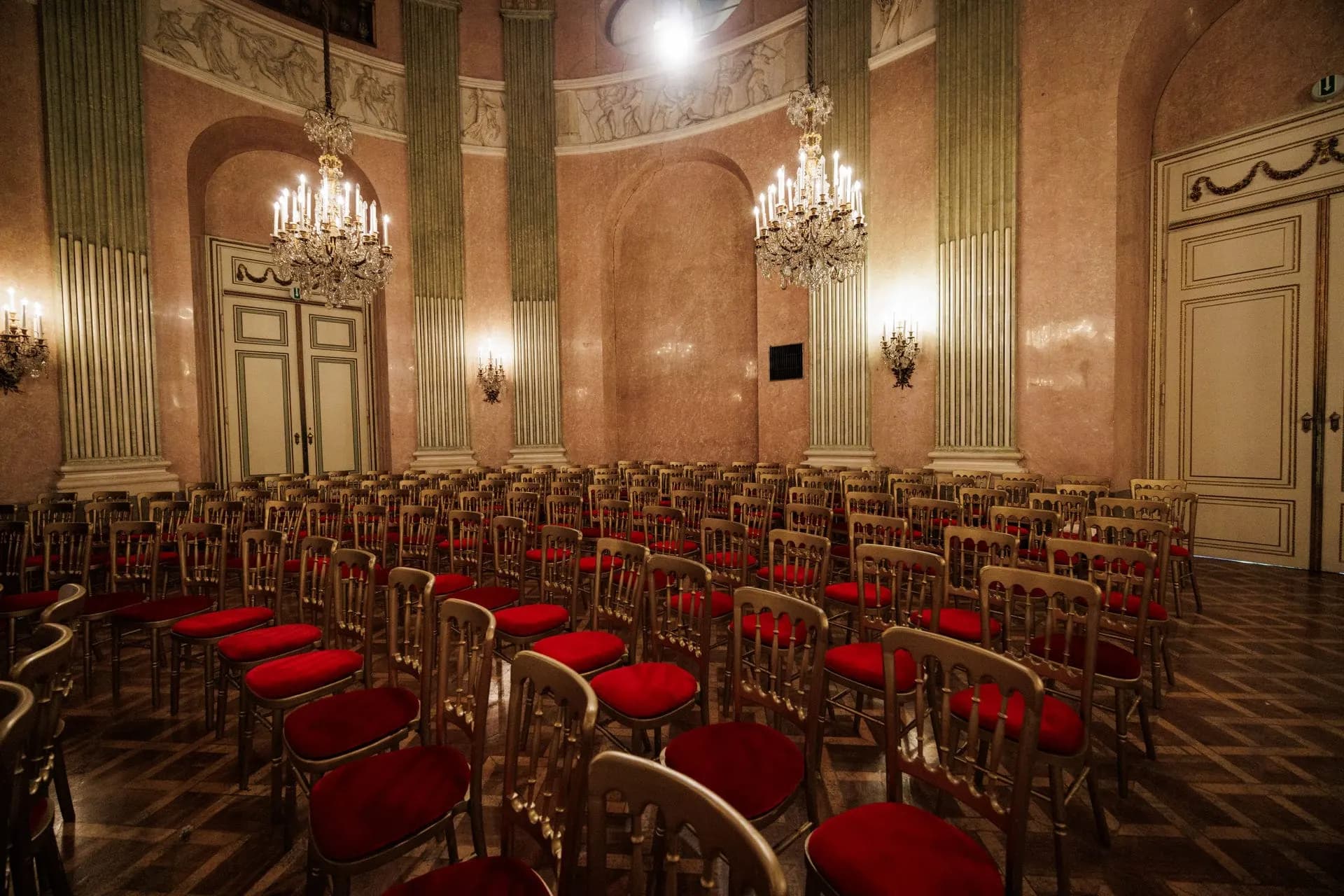
The Beletage shines anew
The historic state rooms of the Beletage are restored. Until 2014 the palace hosts the traditional Rose Ball.
 Today
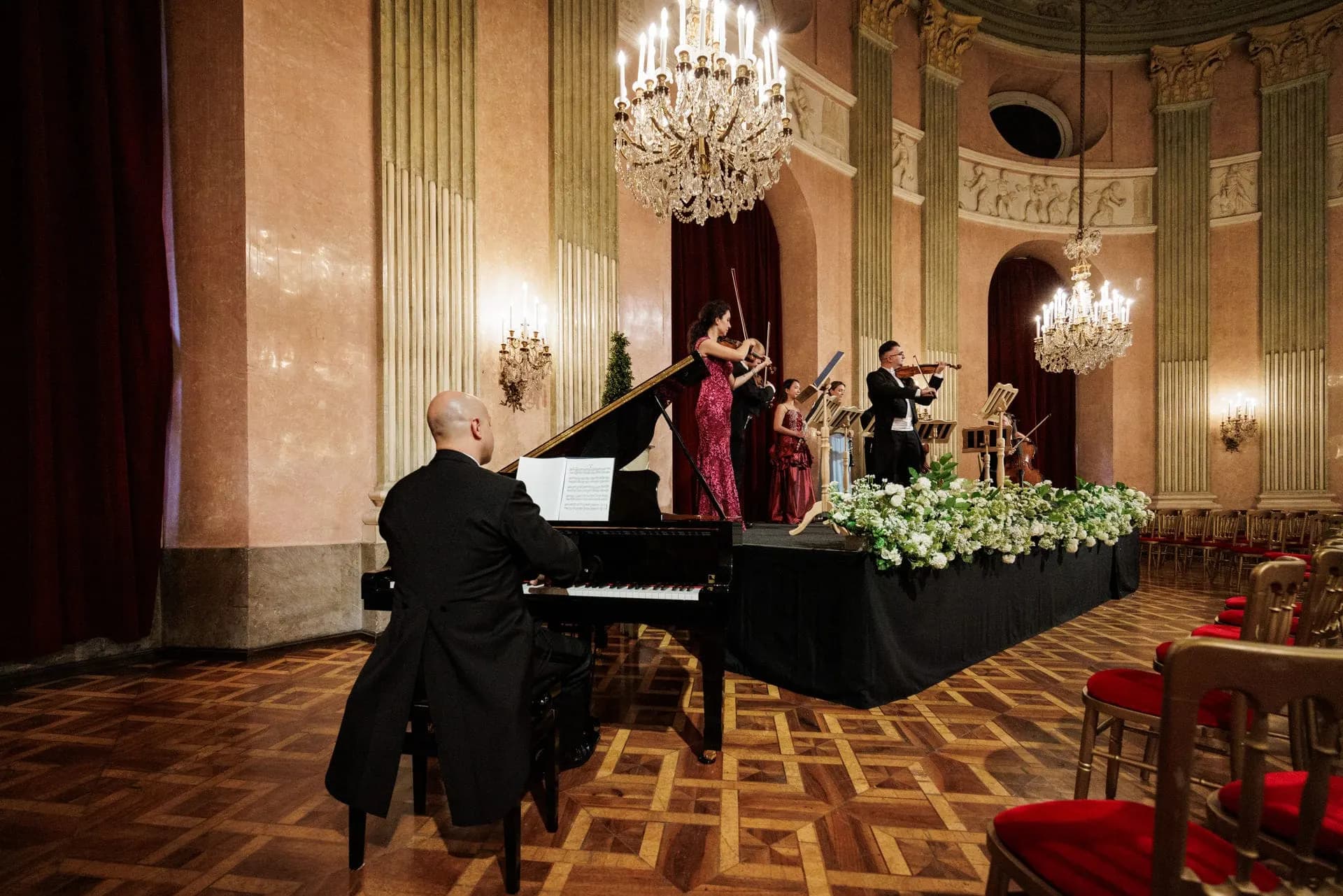
Imperial elegance for a new generation
As operators of the Mirage in the Prater and organisers of the Vienna Mozart Concerts, we open the palace for weddings, corporate events, balls and concerts – with 17 rooms for up to 1,000 guests and the Imperial Gala Concert, which keeps the house’s musical tradition alive.
Sources: Wien Geschichte Wiki · Wikipedia
Tradition meets modernity
With our experience as operators of the Mirage in Vienna's Prater park, where we have been organising successful events for years, we are now opening the Palais Auersperg to a new generation. Our goal: to combine imperial elegance with contemporary event culture.
For over 40 years, we have also been organising the Vienna Mozart Concerts in Vienna's largest concert halls – a cultural highlight that attracts around 200,000 visitors every year. These decades of experience in international concert and event management give us the necessary expertise to organise even large events with the utmost professionalism and precision.
Whether it's a corporate event, private celebration, wedding or conference – we offer comprehensive support from the initial idea to the final details. With formats such as the Imperial Gala Concert, we keep the musical tradition of the house alive and build bridges between history and the present.
Today, the Palais Auersperg is not only a historical monument, but also a lively meeting place where the past, culture and modern event culture combine to create unforgettable moments.